Footwear for Comfort & Efficiency
In the climbing & mountaineering industry, we refer to “approach shoes” in two distinct ways:
Approach Shoes (for Rock Climbers)
“A ‘climber’s sneaker’ designed with stiff edges, sticky climbing rubber, and a “climbing toe”. Ideal for efficient travel in 3rd, 4th, and low 5th class rocky terrain.”
Approach shoes allow an experienced user to avoid constrictive climbing shoes when covering a mixture of terrain in the mountains.
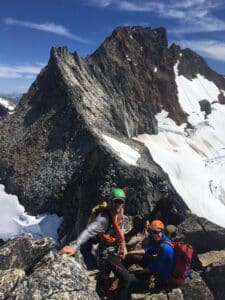
They are padded & comfortable even over long hours of use, and are durable enough to stand up to years of abuse in rocky terrain. These uniquely designed shoes also make excellent belay shoes! Approach shoes stay comfortable even when, for example, standing around at a crag for long periods of time.
Rock climbers benefit from choosing purpose-built approach shoes. That said, they are a bit heavier than other kinds of footwear due to climbing rubber and extra-durable materials like leather in their construction. They are a must when you want to move quickly & securely over varied terrain- no climber’s kit is complete without a pair of comfortable approach shoes.
Perfect for: 13-Day Course, 8 Day Intermediate, 5 Day Rock Climbing Course, Alpine Rock Course, Forbidden Peak.
Pick models like: Scarpa Gecko, La Sportiva Boulder X, Five Ten Guide Tennie.
Approach Shoes (for Mountaineers)
“Any kind of athletic footwear used ‘on approach’ to a camp or objective. Approach shoes mean avoiding heavier, stiffer mountaineering boots until necessary.”
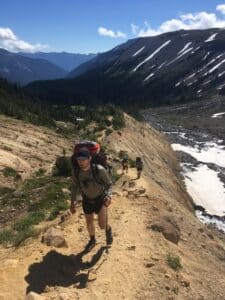
We often refer to approach shoes in this way, and choose to wear comfortable shoes when approaching a glacier/snowfield. Running shoes are ideal & budget-friendly approach shoes for those newer to the climbing scene. Many kinds of shoes can work well as approach shoes in this sense- but it’s best to prioritize lightweight designs.
Light trail running shoes best achieve this purpose. They are designed to be as light as possible, quick-drying, supportive of your feet, and secure in challenging and variable terrain. Approach shoes are almost always worth the extra weight when several miles of dry trail lay between you and a snowfield or glacier where you might change into mountaineering boots. Approach shoes are very comfortable, and you will be able to move nimbly while saving energy over the course of a taxing approach.
Perfect for: Mount Rainier via Muir/DC, Kautz, or Emmons, Mount Baker, Mount Shuksan, trekking.
Pick models like: La Sportiva Helios SR, Scarpa Spin, TNF Ultra Endurance.