Mount Adams Climb + Ski Itinerary
1 Week Before the Climb
Gear Check. Our trip starts with a virtual Zoom gear check at 12:00 p.m. PT one week prior to the trip to ensure that everyone is fully equipped and prepared. We’ll review the functionality of each piece of gear, packing methodology, and Leave No Trace practices. This orientation lasts about 1.5 hours.
Skills highlighted today:
- Gear functionality & layering systems
- Leave No Trace Principals & wilderness ethics
- Packing methodology
- Route planning
Day 1
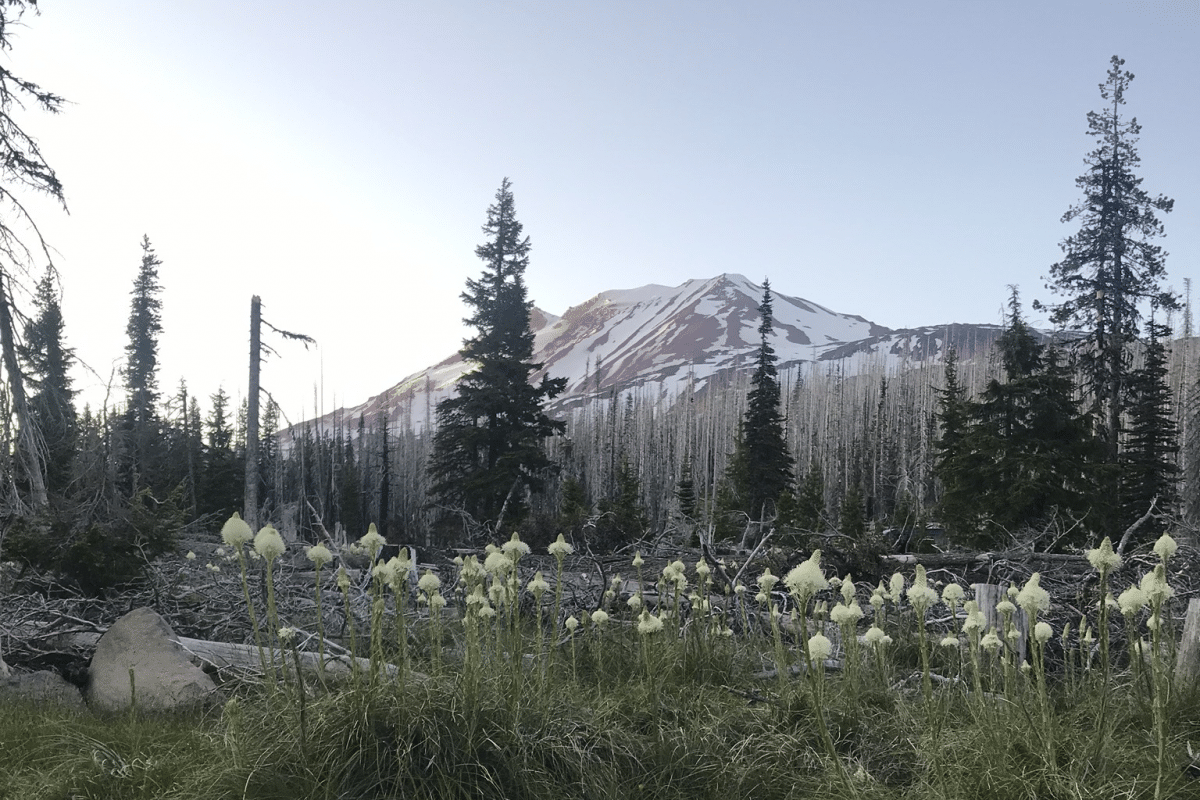
Meet in White Salmon and enter the field. We’ll meet at 7:30 a.m. at the Inn of White Salmon in White Salmon, WA. We’ll then drive to the Cold Springs railhead at 5,600′ and begin our approach. The approach to your camp is 3,650′ of elevation gain and takes four to five hours. Approach conditions vary from year to year and can even change significantly in a week. Some trips we will be able to skin from the trailhead, others we wear trail shoes and carry our skis and boots until we hit consistent snow cover.
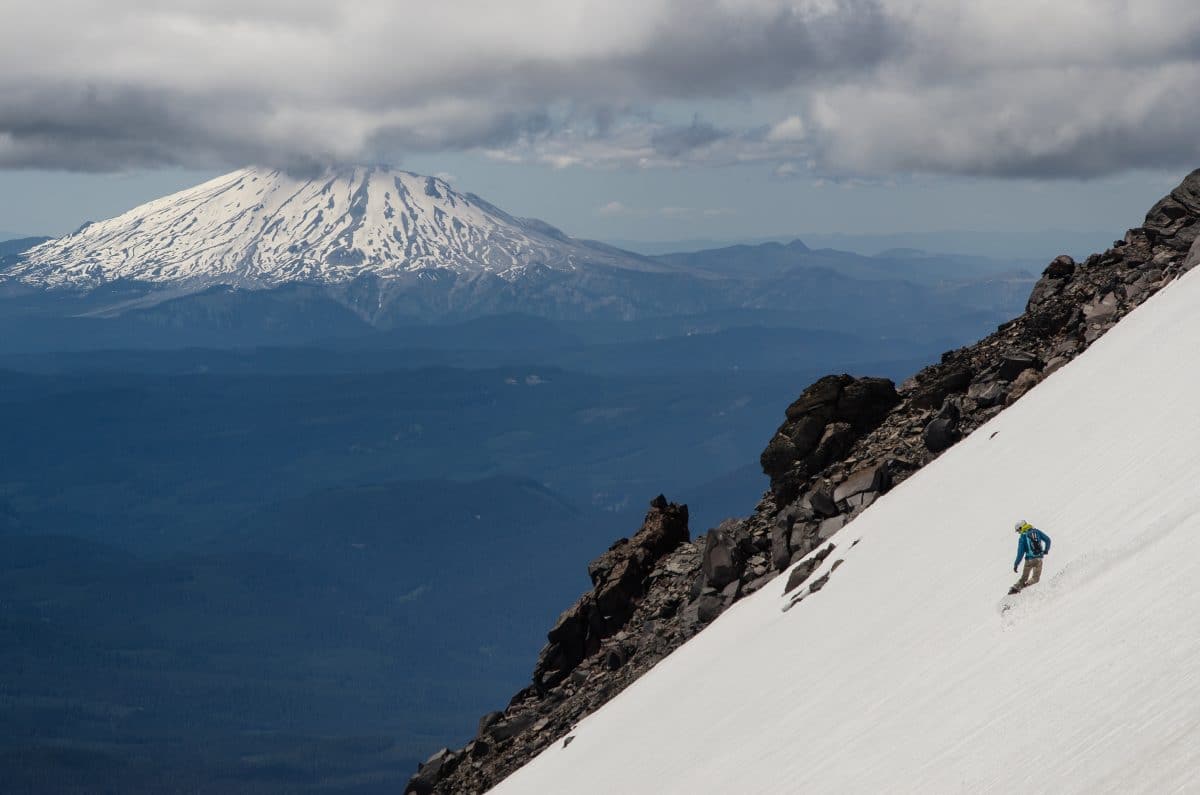
Our climb will take us through open forest and into alpine terrain on our way to our camp, which is spectacularly situated at the “Lunch Counter” at 9,250′. From here, climbers can view stunning views of Mount Hood and Mount St. Helens to the south and the sunset to the west. Once we establish camp, we’ll take time to cover Leave No Trace principles.
A successful ascent and ski descent of a mountain like Mount Adams requires a diverse skill set. Depending on conditions, we may need to ascend the final push to the summit on foot instead of skinning, and all team members must be able to travel competently both in and out of skis/splitboards. To ensure we have these skills down, we will spend this evening learning risk aware and efficient steep snow and glacier travel skills, including crampon technique, ice axe usage, and self-arrest.
Skills highlighted today:
- Trailhead equipment check
- Nutrition, hydration, pressure breathing, and temperature management
- Maximizing efficiency in backcountry uphill travel (kick turns, heel risers, and breaking trail techniques)
- Route finding
- Avalanche hazard recognition
- Camp craft
- Crampon techniques for boots as well as skis/splitboards
- Ice axe usage & self arrest
- Descending techniques for skiing/riding in the backcountry
- Efficient transitions
Day 2
Summit day! Unlike summer ascents of Mount Adams where we get up pre-dawn to climb, our departure time will vary based on conditions. Warm temperatures overnight will necessitate an early start whereas cold frozen conditions on the upper mountain call for a later departure to get soft snow on the descent. After breakfast, we depart camp on skis and skin up a long snowfield to Piker’s Peak (11,657′) – a deceptive false summit. From here, it’s about another 800′ to the true summit at 12,276 feet. On a clear day, you can see Mount Jefferson, Mount Hood, Mount Rainier, Mount Baker, and Mount St. Helen’s – a veritable who’s who of the Cascade volcanoes. At a moderate pace, the summit climb should take three to four hours.
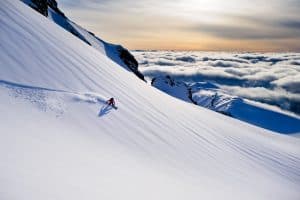
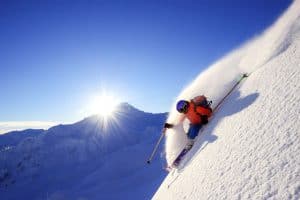
Once we’ve had our fill of the panoramic views, it’s time to rip skins and enjoy one of the nicest ski runs on any of the northern Cascades volcanoes – over 7,000′ of skiable vertical. Depending on conditions and the skill level and interests of the group, we will either ski the famous Southwest Chutes or we will ski back down the south face that we just climbed. The SW Chutes offer a nearly 5,000′ descent of sustained 35-40 degree skiing – a highly sought after line in the Northwest. This route does require us to traverse back on skins to the Lunch Counter to break down our camp.
If we choose to ski back down the south face, we ski straight back to our camp. A particular treat is a near-perfect 25-30-degree pitch for over 2,500′ from Piker’s Peak to Lunch Counter. In late spring, both these descent options often have excellent corn snow. Once at Lunch Counter, we’ll have a quick break for lunch, pack up belongings and continue our ski back down to the trailhead. Skiers can either overnight in White Salmon and take advantage of excellent après ski culinary options or make the drive back to home.
Skills highlighted today
- Our summit attempt allows us to implement and enforce all the skills we learned over the previous 2 days.
- Terrain selection
- Advanced ski / ride techniques
- Group management
You guys once again exceeded my expectations on Elbrus trip. From the time I requested information until we returned to the US, Alpine Ascents was a first class act. All of the indigenous tour guides, mountain guides and cooks were superb.