Mount Baker Additional Information and Links of Interest
Climbing Information from the Mount Baker-Snoqualmie National Forest
The Mt. Baker Summit climbing page contains information about climbing routes, safety, and regulations.
Mount Baker History
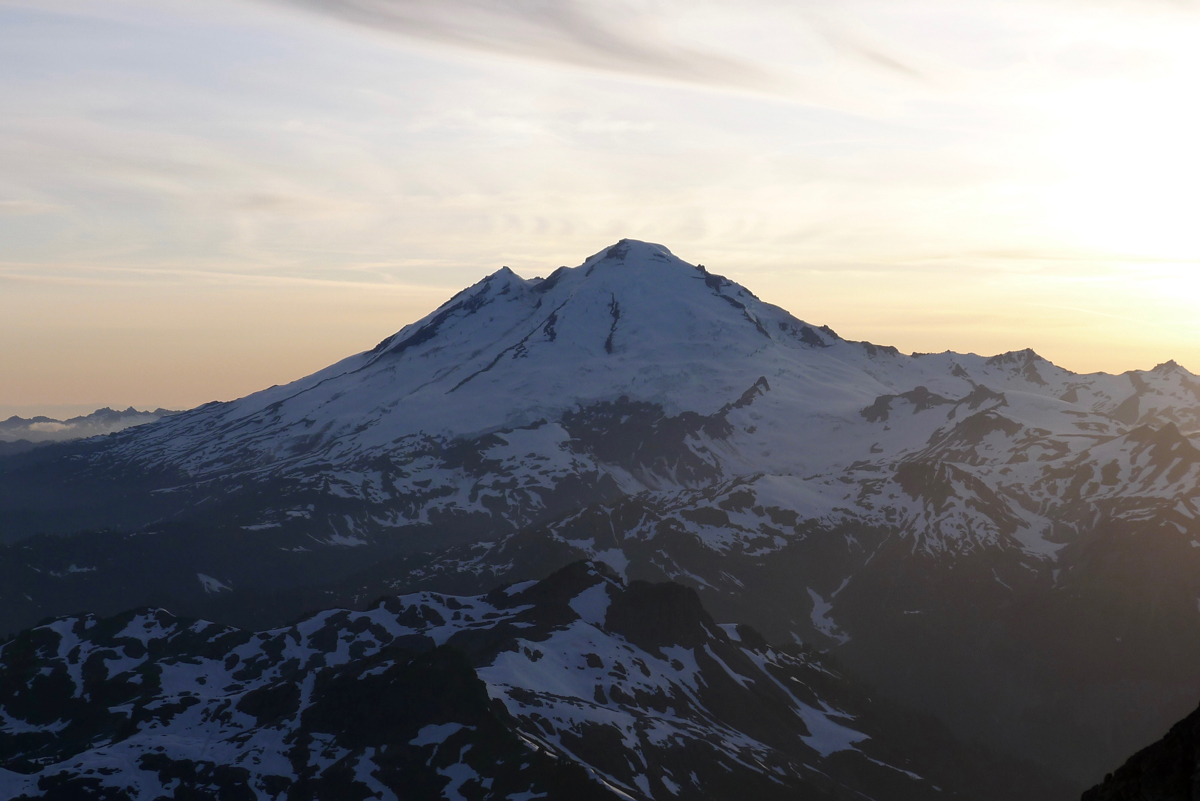
- Interested in learning more about Koma Kulshan (Mount Baker)? You can bone up on the basics here.
- As you might have heard, Mt. Baker is actually a volcano. You can read the USGS geology and history summary for this beautiful volcano here. If you want to learn more, check out the Mount Baker Volcano Research Center site. You can review the eruptive history, geochemistry, and watch videos of the Sherman-Crater fumarole. The Center even maintains a blog!
- For a completely different take on Mount Baker, check out the article The Mythical Fire-Mountains of the Cascades by Scientific American.
Bear Safety and Awareness
- Follow these precautions to ensure that your stay in bear country is uneventful. https://www.fs.usda.gov/detail/mbs/recreation/?cid=stelprdb5181341
- The Black Bear Outreach Project seeks to promote safe coexistence among humans, pets, livestock and bears. Learn about the biology and behavior of black bears, tips for coexistance with black bears, and important safety information here.
- The Western Wildlife Organization has compiled a rich library of bear safety, research, and educational videos.
Multimedia Links about the North Cascades
Keepers of the Beat
Geologist Dr. Jon Riedel eats, sleeps, and breathes glaciers. They are high, hard-to-reach, and hard to study. Keepers of the Beat follows Jon and his work studying glaciers and climate change at North Cascades National Park.
https://vimeo.com/69160413
Measuring Glaciers
National Park Service scientists have been monitoring glaciers at Mount Rainier, North Cascades, and Olympic national parks to document their rates of growth and decline. Not only are glaciers awe-inspiring elemental forces, but they are absolutely critical resources for northwest ecosystems and for human populations. Glaciers are also the clearest evidence of climate change. Measuring glaciers is not for the faint of heart. Besides snow, ice, blasting winds, and crevasses, the necessary equipment is heavy and the distances on foot are long and go up steeply. This video features the people who do this tough work.
http://www.nwparkscience.org/node/1089
Pika Monitoring in NCNP
Join park research partners as they show how they monitor pikas in the steep talus slopes at North Cascades National Park.
http://www.nwparkscience.org/node/1093
Connecting with Carnivores in NCNP
Finding and monitoring bears in rugged Northwest parks has always been dicey. Today, through genetic testing, tufts of bear hair can tell scientists how many animals live in an area, how far they range, and how closely related they are to one another. In this video an NPS biologist demonstrates how to snag bear hair using innovative techniques that include barbed wire, high-tech cameras, and some really stinky scent lure.
http://www.nwparkscience.org/node/1087
Other videos about the park
Long before North Cascades National Park Service Complex was established in 1968, this area was a home. Not only to an astounding diversity of plants and animals, it was the home to Native Americans and a trade gateway between the east and west sides of these mountains. More recent settlers came in the nineteenth century to establish homesteads in places like the Stehekin Valley, or to mine elusive minerals – like gold, or to trap furbearing animals such as the beaver, otter, and marten. Now it is preserved as a national park for all to enjoy.
http://www.nwparkscience.org/parks/noca
Yes, the trip was fantastic. Overall I had a very good experience and I am looking forward to booking another trip with Alpine Ascents. The guides were organized, knowledgeable, friendly and experienced. I could tell that this trip was well planned and organized. We were very well informed and knew what to expect. The weather […]