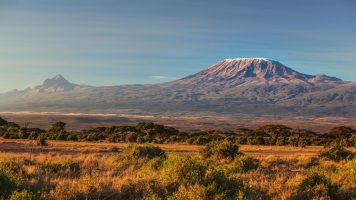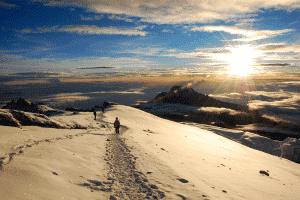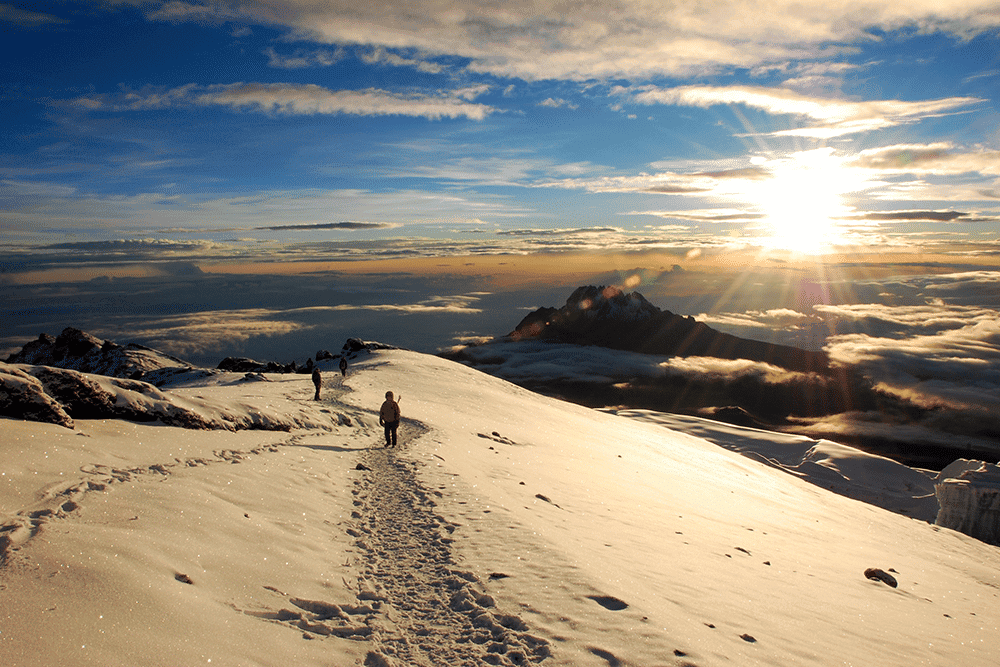
Kilimanjaro isn’t just one of the fabulous and challenging Seven Summits. It has a unique beauty and character that you won’t find on the peaks of Everest or Denali. This UNESCO World Heritage Site offers people a journey through five diverse ecosystems and unsurpassed mountain views. That, plus the accessibility of the mountain, makes it one of the most appealing destinations in Africa. Thousands of climbers travel to Tanzania to summit this impressive mountain each year. So, when is the best time to Climb Kilimanjaro? As the tallest mountain in Africa, Mount Kilimanjaro stands at 5895 meters (19,341 feet) high. This peak can be seen from miles away, looming over the rolling hills and scattered farmland of Tanzania. Mount Kilimanjaro National Park preserves the beauty of the diverse ecosystems calling the mountain home. Lower elevations shift from cultivated subsistence farms to dense Montane forests. That melts away to moors of heather and other hardy plants. The top supports an alpine desert of multicolored lichen that can take years to grow by a few milometers. Finally, climbers can reach the shining white peak itself and experience an arctic landscape hidden in the heart of Africa. This mountain is a semi-extinct volcano. What does that mean? It has three cones, two extinct and one of which is merely dormant. In fact, the Kibo cone still emits gas at its crater. The Kibo summit also features a 1.76 square kilometer glacier. The national park is 1668 square kilometers (641 square miles) and is crisscrossed with hundreds of kilometers of trails. You may see a wide variety of birds, bushbacks, cape buffaloes, and monkeys. On rare occasions, elephants have been spotted near the lower elevations. Check out our safari extension upgrade to see more wildlife and experience the Ngorongoro Crater from a different view. Mount Kilimanjaro is not as technically challenging as many other peaks of similar height. However, altitude sickness is a risk as well as falls and rock slides. There is also a dramatic temperature difference during the climb. The base of the mountain averages at 21 to 27 °C (70 to 80 °F). The summit, Uhuru Point, can be -7 to -29 °C (20 to -20 °F). Preparation is vital for climbers who are going to the top. If you’re considering an expedition to Kilimanjaro, when should you go? Don’t think about seasons of the year, think about rainy season versus dry season. On the mountain, that’s the more important distinction. So what does ‘rainy season’ mean? In some areas of the world, that could be a stretch of near-constant drizzle for weeks or months at a time. In those places, the soggy weather might be broken up by showers so heavy you’d swear someone was spraying you with a hose. However, the Kilimanjaro rainy season isn’t like that. Although you have a greater chance of showers than at other times of the year, it rarely rains all day, every day. This is especially true during the short rainy season (see below). Let’s take a look at Kilimanjaro’s climate: Mid March to early June: Longer and wetter rainy season. Mid June to October: Dry season. November to early December: Shorter, drier rainy season. Late December to early March: Another dry season. Traditionally, the best times to climb Kilimanjaro are December through February and late June through September. However, transition months between wet and dry seasons (like early December) are a good middle ground that offers clearer weather and fewer people. The dry seasons are sunny and breezy, making them the best time to clim Kilimanjaro. There are occasional showers, but the rain doesn’t tend to linger. To maximize your dry days in the visit, aim for the June to October season. Here are a few reasons why you might want to climb Kilimanjaro during this time of the year: For many, the dry seasons are the best time to visit. Climbing during the dry season allows for better weather, trail conditions, and overall a better hiking experience. Climbers looking for decent weather and fewer crowds may opt for transition months. Want to learn more about climbing Mount Kilimanjaro? Check out the Alpine Ascents Kilimanjaro itinerary or feel free to contact us with any other questions!
Kilimanjaro’s Climate
The Dry Season
So When is the Best Time to Climb Kilimanjaro?