Submission by Alpine Ascents Guide Max Lurie
Let’s talk mountain cuisine and hydration, but more specifically cups, bowls, spoons, and other accoutrements. Climbers, mountaineers, and alpinists agonize over every gram of equipment, yet that meticulous planning often stops at the cook tent. Much like pasta shapes pair with specific sauces, changing our perception of flavor, you don’t want to find yourself on the wrong side of mountain etiquette at mealtime. You wouldn’t order penne with an Aglio e Olio sauce or angel hair with a sausage ragu, would you? Obviously, you know better than that. So let’s keep that sophistication on the mountain. After many years of guiding and expeditions, I have seen it all. What works and what doesn’t. Eating replenishes the soul and gives us the fuel we need. On most expeditions, we spend more time chatting with our climbing partners in the cook tent than anywhere else. If we are distracted by our food and the struggle to eat it, that can be detrimental to our success. Mealtime routine and comfort are vitally important to morale.
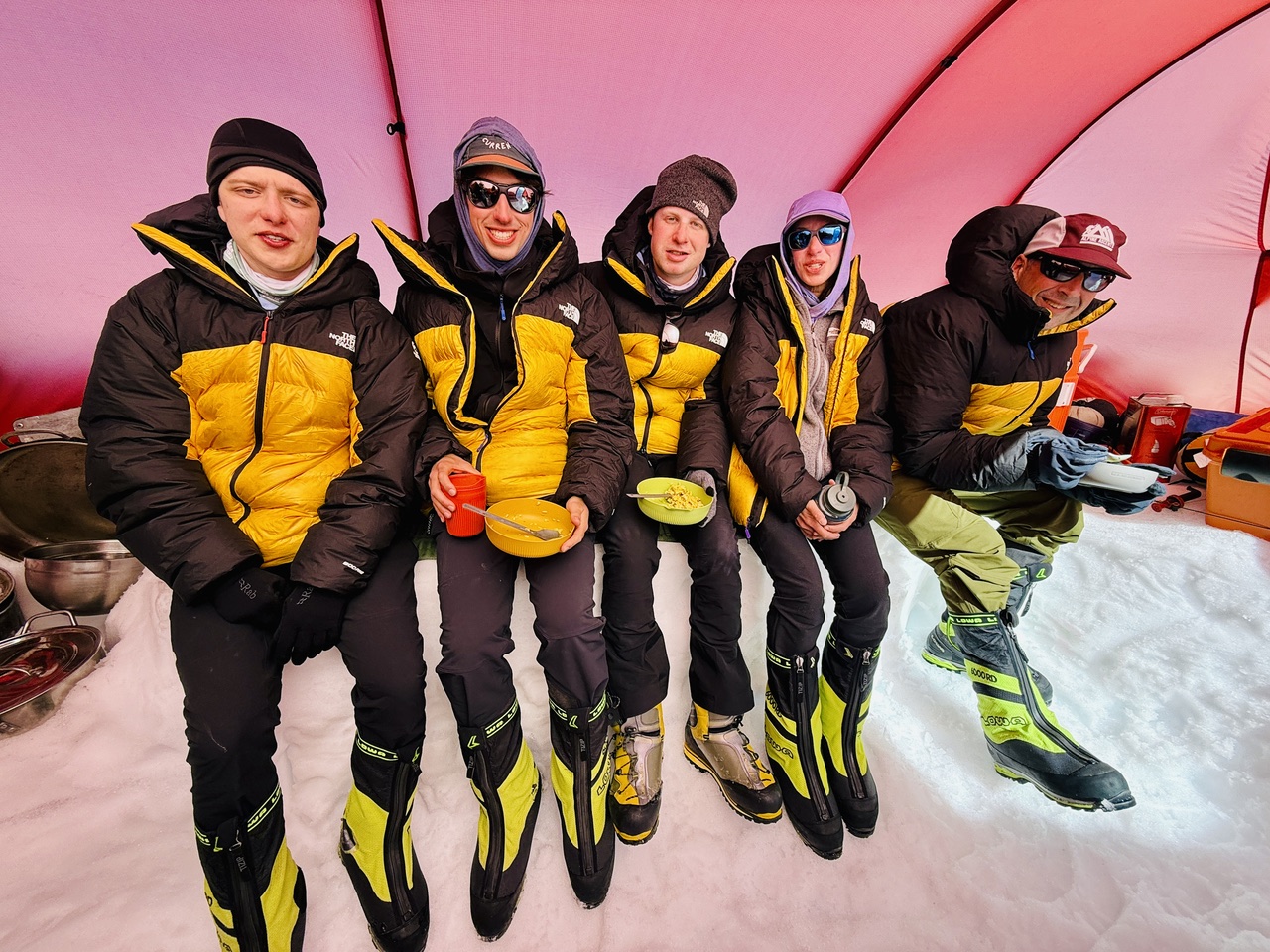
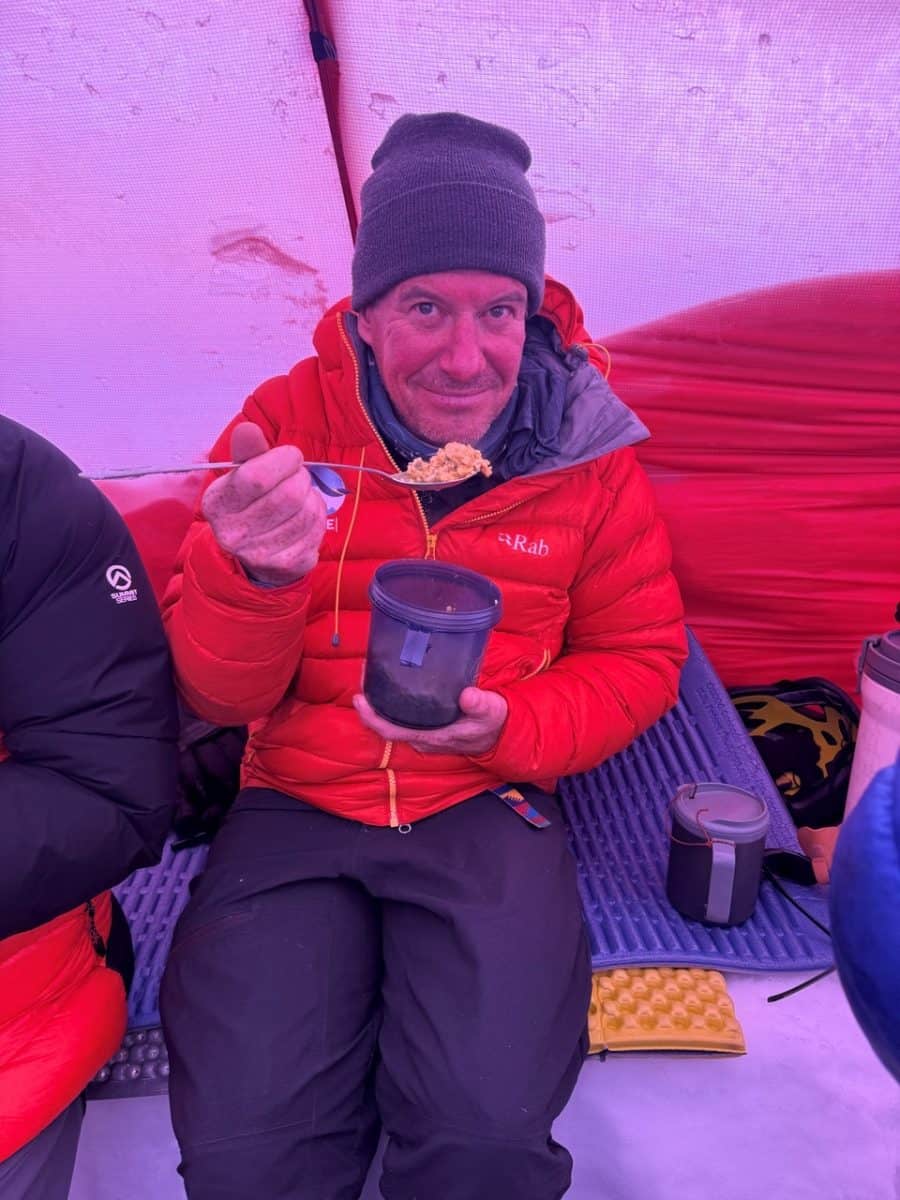
First up, eating vessels. Often overlooked are a few subtle yet important nuances. Plates don’t hold liquids well, and bowls can be bulky to pack because of their shape. Taking both is even less ideal. Metal plates and bowls conduct heat, so you can burn your hand on hot food, and they cool faster in cold environments. Collapsible silicone bowls are difficult to clean because the accordion ridges can hide food particles between meals. For extended expeditions such as Denali, this is not okay. What is the solution? For over a decade now, I have been using SnapfoldTM Bowls, originally designed by Fozzils and acquired by Coghlan’s in 2024. They are super lightweight and pack completely flat. Best of all, because of their shape, you can lick them completely clean! Letting the chef know that you truly appreciate their hard work.
Next up is the eating utensil. Everything from chopsticks (which don’t work well with soup) to an enormous serving spoon. The same rules apply to materials; I’ve seen folks burn their mouths on metal spoons, even after being warned. Another thing to consider with utensils is sturdiness, which metal utensils do quite well (see the aforementioned problem with mouth burns, though). Ask me how many Sporks I’ve broken from eating too aggressively over the years. Hint: It’s more than enough to supply everyone at Thanksgiving dinner if you have a large extended family. “So, you’ve told us what not to use. What do you use?” Well, I am so glad you asked! I use a Humangear Bio Uno; despite its slightly weird name, it is the perfect utensil for mountaineering. Period. I am not even going to try to convince you; just get one. Plus, it comes in pink!
Lastly, let’s talk hydration, which we all know is supremely important. If you ask ten climbers about their hydration system, you’ll get eleven different answers. The standard answer is two 1-liter wide-mouth Nalgene bottles, which go INSIDE your backpack. You’ll notice we haven’t talked about the incredibly important coffee vessel, AKA a cup, yet.
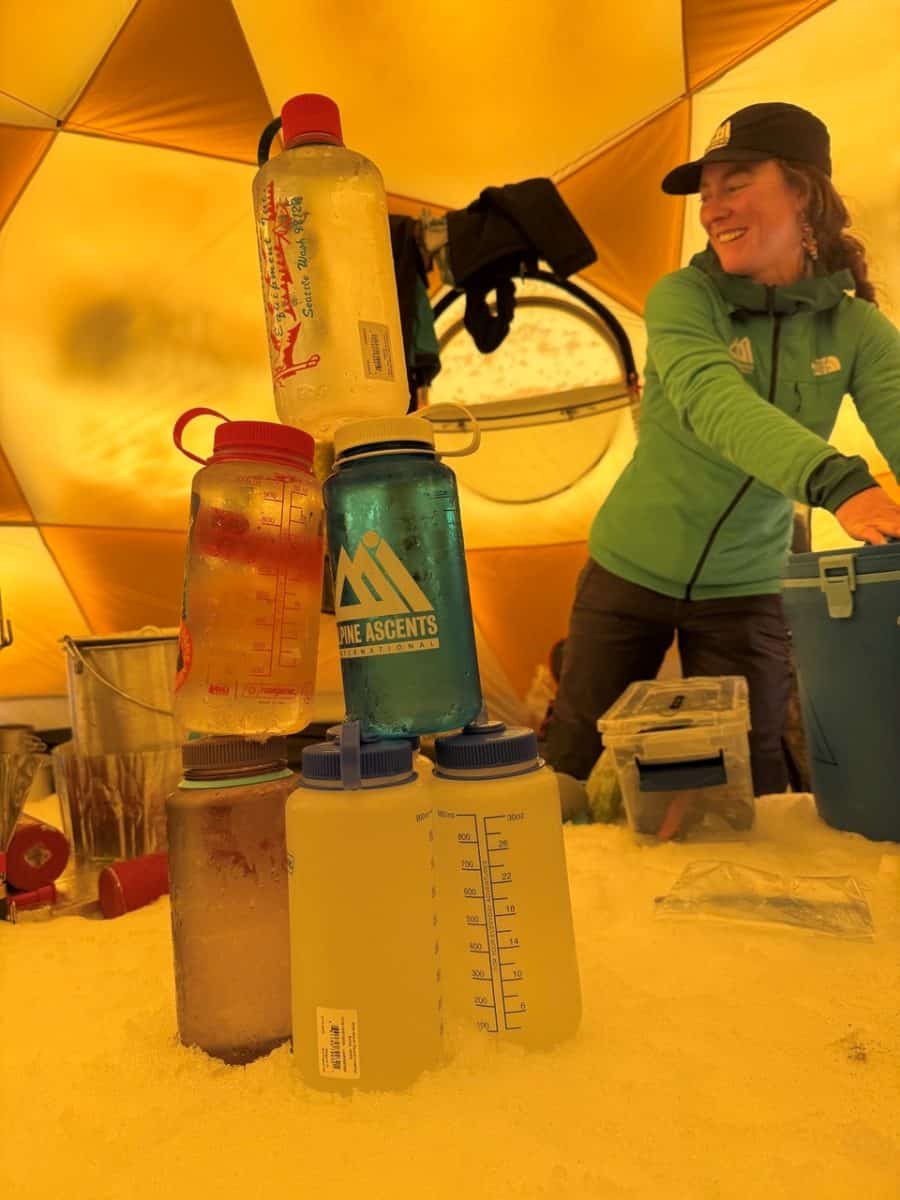
That’s because I don’t bring one (gasp!). But fear not. I bring a Hydro Flask Lightweight Flex Cap Bottle (available in 40 oz, 32 oz, and 24 oz). Formerly known as the Hydro Flask Lightweight Wide Mouth Trail SeriesTM, respectfully. If you want the 32- or 24-oz size, you need to buy the Wide Mouth Flex Cap separately. Sadly. I find that having one Nalgene and one lightweight thermos is more versatile and convenient than carrying two water bottles and a coffee cup. Don’t even get me started on hydration systems with hoses. Those are great for backpacking and mountain biking, but don’t belong in the high peaks. So don’t even try.
These views are based on my own, albeit expert, opinions. We all have different experiences, desires, goals, and ambitions when it comes to culinary comfort in the mountains. Thank you for humoring me. If you made it this far, I am sorry for ranting about mountain cutlery for far longer than you ever thought possible.
Until we eat again!