Greetings Fellow Climbers,
The Cascades climbing season is now fully underway, and overall climbing conditions across Washington remain quite good for mid-May. Over the past two weeks, our teams have been active on Mount Rainier, Mount Baker, and throughout the Cascades, with guides reporting generally favorable travel conditions, strong route coverage on the upper mountains, and several successful summits. The major theme unfolding this season continues to be the below-average snowpack across much of the Pacific Northwest. While conditions on the upper elevations of Rainier and Baker remain solid for this time of year, the lower mountain is melting out quickly due to the unusually warm and dry spring pattern we’ve experienced over the past month. Looking ahead, the current forecast calls for a transition away from the extended high-pressure pattern we’ve enjoyed recently. A more active and seasonable weather pattern is expected to return later this week, bringing cooler temperatures along with periods of precipitation and new snow at higher elevations on the volcanoes and throughout the Cascades.
Tahoma (Mount Rainier)
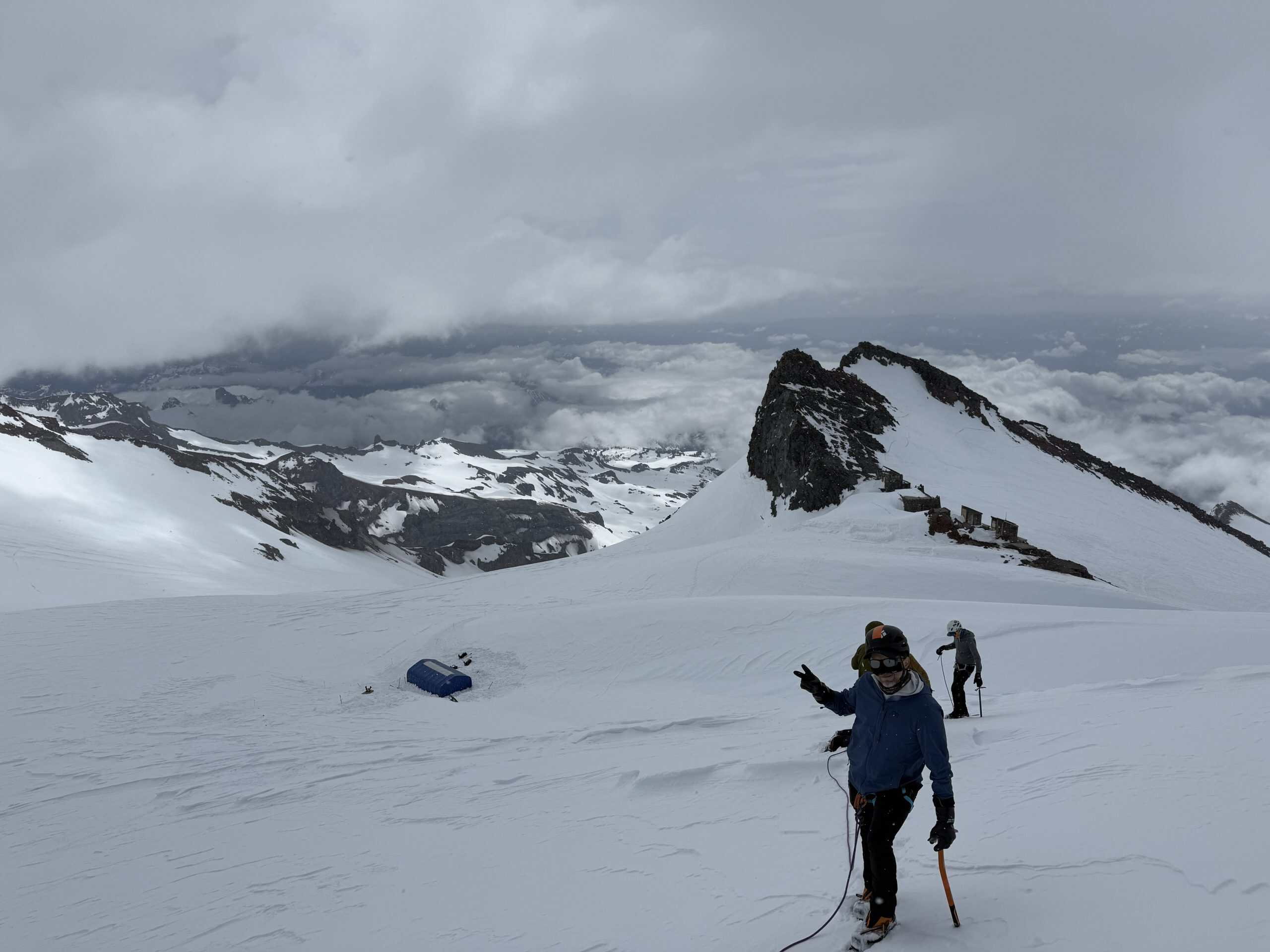
On Mount Rainier, climbers can now expect mostly snow-covered travel beginning near Paradise, with the trail to Pebble Creek rapidly emerging in places. The Muir Snowfield remains in very good shape with a well-established bootpack to Camp Muir. Above approximately 8,000 feet, snow coverage remains solid for this point in the season, though guides are already noting melt patterns and exposed terrain features appearing earlier than normal below that elevation. Guides on Rainier continue to report cold temperatures and firm conditions during the early morning hours, and a transition to soft snow travel later in the day with warm daytime temperatures. Climbers should be prepared for rapidly changing surface conditions and increasingly soft snow on descents as daytime heating continues.
North Cascades
In the North Cascades, climbers should continue to expect snowline around 5,000 feet depending on aspect and terrain. While many alpine objectives still remain firmly in spring conditions, the warm temperatures have accelerated melt-freeze cycles and route transitions are beginning earlier than what we would typically expect in mid-May. For climbers heading into the mountains over the next couple of weeks, now is the time to be diligent with equipment preparation and layering systems. Despite the warm temperatures in Seattle and low elevations, conditions in the alpine remain very much winter-like, especially during overnight and summit pushes. Goggles, warm gloves, hard shells, and proper cold-weather systems remain essential equipment on all glaciated climbs.
As always, our guides will continue monitoring conditions closely and providing updates from the field as the season progresses.
We look forward to seeing many of you in the mountains soon.